There are words that become so burdensome that we stop using them. “Politics” is one of them.
For many people, talking about politics means getting into an uncomfortable discussion, choosing a side, defending an ideology, fighting for a political party, or repeating talking points that seem to have been scripted before we even had a chance to think for ourselves.
But perhaps we have oversimplified a word that, in reality, touches every aspect of human life.
What if politics didn't begin in Congress, or during an election campaign, or at the ballot box, but rather in the way we look at one another, listen to one another, care for one another, and live together?
My name is Meraki. I'm writing based on a question that has been on my mind for some time: How can we live together without ceasing to be ourselves?
From there, I’d like to offer you another perspective: politics isn’t just about political parties. Politics is about managing how we live together. And if living together involves dialogue, negotiation, compromise, setting boundaries, recognizing others, and finding our place within a community, then everything we discuss is, at its core, also politics.
What Is Politics, Really?
Politics is often associated with institutional power: governments, laws, elections, authorities, political parties, and policies. All of these are part of politics, of course, but they do not encompass the whole of it.
Even before political parties existed, there was already a need to live together. Even before ideologies existed, there were already questions about territory, food, care, desire, fear, belonging, authority, family, tribe, and community.
That’s why, when we ask ourselves what politics is, perhaps we should look a little closer. Politics is about deciding how we live together. It’s the way we organize our differences, our resources, our emotions, our bodies, our boundaries, and the ways we relate to one another.
Politics exists within a family, a couple, a company, a community, and even a conversation. Even silence can be political, because every time we interact with others, we are part of a system of visible and invisible agreements.
Politics, viewed from this perspective, is not merely a struggle for power. It is the everyday architecture of coexistence.
Everyday Politics: Where Culture Is Shaped
The Politics of Small Decisions
When you decide which coffee to buy, there are economic factors at play: production, trade, labor, consumption, access, and value. When a couple decides who will wash the dishes, domestic dynamics come into play: time, gender, recognition, fairness, and the division of responsibilities.
When a group of friends decides where to meet, emotional dynamics are at play. Preferences, inclusion, comfort, hierarchies, and a sense of belonging are all negotiated. Even the way you greet a neighbor conveys a relationship marked by closeness, distance, trust, respect, or indifference.
Everyday politics doesn't always make the news, but it shapes the quality of our lives. Sometimes we think society changes only when a law is changed, but it also changes when we change the way we speak, listen, connect with one another, view the body, understand love, acknowledge differences, and build community.

Language Policy
Language is also political, because it does not merely describe reality—it organizes it. When we name something, we give it social existence; when we avoid naming it, we often push it to the margins.
That is why it matters how we talk about love, desire, loneliness, pleasure, spirituality, the body, relationships, freedom, community, and belonging. A word can open a door, while a label can close it. A conversation can set us free, but a judgment can also isolate us.
Every human conversation has a political dimension because in it we negotiate meaning, power, legitimacy, and belonging.
Why We Confuse Politics with Political Parties
One of the major problems of our time is that many people have lost interest in politics because they’ve confused it with partisan bickering. And that’s understandable.
When politics becomes nothing but fighting, propaganda, scandal, moral superiority, or tribal identity, many sensitive people turn away. Not necessarily because they don’t care about the world, but because they don’t feel represented by the way the world is having this discussion.
There are deeply political people who are not members of any political party. People who care about justice, community, the environment, education, well-being, sexuality, art, travel, spirituality, culture, or the meaning of life.
People who don't want to shout louder, but to understand better. People who aren't looking to impose a truth, but to find more humane ways of living together.
Maybe you're one of them. Maybe you're interested in politics, but not in the fighting. Maybe you care about society, but you don't identify with either side. Maybe you want to get involved, but you don't know where to start.
Perhaps the answer doesn't lie in choosing a side, but in returning to the original question: How do we want to live together?
Politics and Personal Development: Inner Change Also Transforms How We Live Together
For a long time, the personal and the political were kept separate, as if one belonged to the inner world and the other to the public world. But that separation is incomplete.
- The way you manage your emotions affects how you get along with others.
- The way you acknowledge your wounds influences how you love.
- The way you work on your self-esteem influences the relationships you enter into.
- The way you heal your shame affects your freedom.
- The way you relate to your desires influences the culture you help shape.
Personal growth isn't just about looking in the mirror to feel better about yourself. It's also about asking yourself how your wounds, fears, shortcomings, masks, and desires affect others.
Getting to know ourselves better also transforms the way we interact with one another. When a person recognizes their own boundaries, they learn to respect others’ boundaries more clearly. By freeing themselves from guilt, they can have conversations that are more honest, less defensive, and more humane. And when they begin to listen to their own body, they stop relating to the other person’s body through venting, power, or validation, and instead connect from a place that is more mindful, present, and respectful.
That is why personal development also has a political dimension: it transforms the way we participate in society.

Love Is Also Political: Humberto Maturana's Perspective
Here we see a deeply needed perspective: that of Humberto Maturana.
Maturana argued that love should not be understood solely as romance or affection, but as the emotion that underlies social life. From his perspective, to love implies accepting the other as a legitimate other in our shared existence.
This idea seems simple, but it is revolutionary. If politics is the management of coexistence, then love is also a political act.
I am not speaking here of romantic love, but rather of an ethical attitude toward the other. To love, from this perspective, does not mean agreeing with everything, approving of everything, or abandoning one’s own boundaries. It means recognizing that the other has the right to exist as another: with their own history, body, desires, differences, way of seeking meaning, and way of inhabiting the world.
Many human conflicts arise precisely when we fail to recognize the legitimacy of the other. When we reduce them to a label, a threat, an ideology, a body that doesn’t conform, an orientation that makes us uncomfortable, a ridiculous spirituality, a way of loving we don’t understand, or a life that doesn’t fit within our certainties.
From this perspective, a more humane way of living together does not begin when we all think alike. It begins when we can acknowledge the other without needing to negate them.
Politics, loneliness, and belonging: when not fitting in is also a sign
There are people who feel lonely not because they don't know how to relate to others, but because they can't find spaces where their way of feeling, thinking, loving, or desiring can exist naturally.
Not fitting in can hurt. It can make you feel strange, excessive, inadequate, wrong, or out of place. But sometimes not fitting in is also a sign: perhaps your sensitivity needs a different conversation, a different community, a different language, and a different way of living together.
Many people travel in search of scenery, but deep down they are searching for a sense of belonging. They seek to encounter other ways of life and to discover that the world is broader than the norms they have come to live by.
Travel, when done mindfully, is also political. It shows us that no single culture holds a monopoly on the truth and that there are many ways to love, eat, greet one another, celebrate, believe, rest, work, touch, look, and live together.
Travel reminds us that normalcy is local. And often, what we call “being weird” is simply being born into a context that’s too narrow for our soul.
From that perspective arise the Desire Circle experiences: Trips, gatherings, and spaces designed to connect with others through shared interests, conversation, and the desire to experience something deeper than just a simple getaway. It’s not just about visiting places, but about traveling as a community, opening up new ways of belonging, and discovering that when we share the journey with like-minded people, the world no longer feels so foreign.
The body is also political

No society is neutral when it comes to the body. Every culture defines which bodies are accepted, which desires are legitimate, which forms of love are visible, which pleasures are permitted, which relationships are recognized, and which expressions must remain hidden.
The way we talk about sexuality is political. So, too, is the way we judge others’ desires, manage shame, educate about consent, or frame conversations about pleasure, boundaries, and affection.
That is why creating spaces for conversation about sexuality, well-being, desire, intimacy, the body, and human connection is also a form of cultural policy.
No partisan politics. No ideological propaganda. Cultural policy.
Because it means asking ourselves what kind of coexistence we want to build around the body, desire, and difference.
Politics as the Design of Experiences of Coexistence
Politics doesn't just happen when we live together; it also happens when we design the spaces where that coexistence takes place.
An after-work gathering, a private community, a wellness experience, a trip, a workshop, a ceremony, a walk, an intimate conversation, or a cultural event are not neutral spaces. Each space offers a particular way of relating.
It can foster trust or distrust, empty consumption or genuine connection, competition or collaboration, judgment or openness, unconscious desire or responsible desire, isolation or a sense of belonging, avoidance or transformation.
From this perspective, building community is also a form of politics. A community is not just a group of people gathered in one place; it is a system of coexistence. And every system of coexistence requires codes, boundaries, symbols, experiences, language, purpose, and culture.
A Conscious Community: A Policy of Genuine Connection
A community is not a crowd
A gathering brings people together. A community binds them together.
The difference lies in the quality of our shared life. A conscious community does not merely seek to bring people together in the same space, but rather to create the conditions for people to recognize one another, converse, explore, care for one another, and connect on a more authentic level.
That requires design, purpose, boundaries, and a shared culture. All of that is deeply political.
Desire also needs culture
Desire, without culture, can turn into consumption. Freedom, without conscience, can turn into invasion. Openness, without care, can turn into confusion. Community, without respect, can turn into a market.
That is why it is not enough to simply create spaces for exploration. We must provide them with context, language, ethics, and meaning.
There, desire ceases to be merely an impulse and becomes an opportunity for self-knowledge, connection, and growth. That, too, is a form of politics: a politics of conscious desire.

Politics, spirituality, and worldviews: many ways of looking at coexistence
Across different cultures and worldviews, coexistence has never been merely an administrative matter.
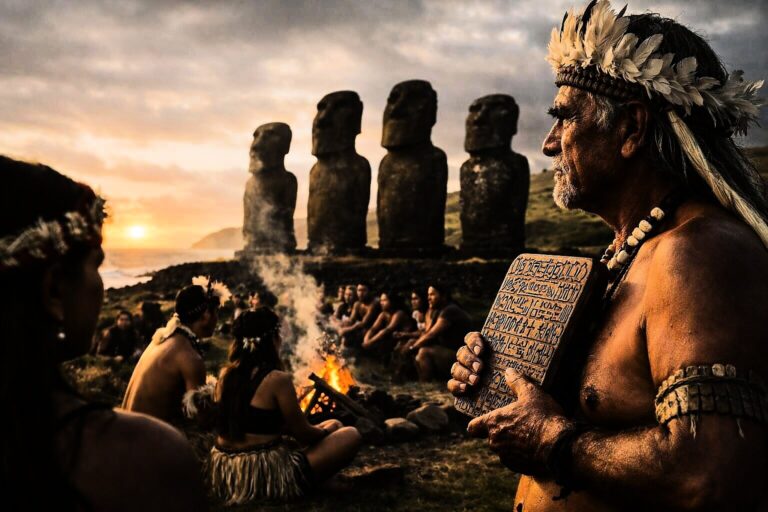
For many Indigenous peoples, human life is intertwined with the earth, the cycles, the elements, animals, ancestors, and the community. In many spiritual traditions, human beings are not viewed as separate from the universe, but rather as part of a web of relationships.
Some symbolic systems—such as astrology, the I Ching, the medicine wheel, Kabbalah, Mesoamerican tonal systems, or certain Andean traditions—view identity not as a fixed box, but as a map of forces, cycles, lessons, and connections.
Regardless of whether we interpret these traditions literally, symbolically, or culturally, they all remind us of something important: we do not exist alone.
We are relationships. Relationships with others, with the earth, with the body, with desire, with memory, with mystery, and with the community.
From this perspective, politics is not merely the exercise of power. It is also a spiritual and cultural question: How do we inhabit the web of life of which we are a part?
A policy for those who don't feel included
This article isn't written to convince those who already believe they have all the answers. It's written for those who suspect that life might be more expansive.
For those who are drawn to politics but tired of polarization. For those seeking personal growth but who don’t want to get trapped in individualism. For those who love to travel because they sense that every culture opens a door within. For those who long for community but don’t want to lose their freedom.
It is also written for those who feel lonely because they don't fit into society as it is organized. For those who want to love, explore, converse, and belong without having to become a false version of themselves.
Maybe the kind of politics we need doesn't start with shouting louder. Maybe it starts with listening better.
And perhaps its central questions are simpler, yet far more profound: What kind of coexistence are we creating? What bonds are we nurturing? What kind of community are we building? What place do we give to the body, to desire, to love, to difference, and to freedom?
What kind of politics do we practice every day?
Politics isn't just about how we vote. It's also about how we treat those who think differently, how we view those who have different desires, and how we listen to those who don't fit in.
It is evident in the way we organize a community, care for a space, exercise power, set boundaries, seek consent, and recognize the legitimacy of others.
Every conversation is a small gathering. Every connection is a small society. Every community is a way of seeing the world.
And every human experience can either reinforce existing culture or open up a different possibility.
Politics from a Human Perspective
So, what is politics?
Politics is the way we choose to live together. It is the management of power, boundaries, resources, symbols, bodies, desires, and agreements within a community.
It is the ongoing dialogue between freedom and responsibility. It is the complex art of living together without negating one another.
That's why, yes: everything we talk about, at its core, is politics. Every conversation defines a type of relationship; every boundary is a form of respect; every agreement is a form of community. Even every silence can sustain or transform a culture.
And every time we recognize the other as a legitimate other, we are practicing a different kind of politics: a politics based not on imposition, but on conscious coexistence.
Perhaps the question is no longer whether everything is politics.
Perhaps the question is: What kind of politics are we practicing in the way we love, live together, desire, and relate to others?
If you've made it this far, perhaps this text wasn't just about politics. Maybe it spoke to you about belonging, community, desire, loneliness, and that deep-seated longing to find a place where you can be yourself without hiding essential parts of who you are.
Meraki
At Desire Circle, we believe that true cultural transformation begins with the way we relate to one another. We do not seek to impose a particular way of thinking, loving, or desiring; rather, we seek to create spaces where conversation, respect, curiosity, the body, difference, and human connection can coexist with greater awareness.
Because perhaps the most profound aspect of politics lies not only in how we vote from time to time, but in how we choose to treat one another every day.
And perhaps, as we learn to get along better, we'll also learn to live better.