There are nights that we look at. Others, however, seem to pass right through us.
Winter in the Elqui Valley has an air of ancient mystery. The air grows colder, the hills fall silent, and the sky—far from the glare of the big cities—begins to reveal a depth that is hard to explain.
In that darkness, the Southern Delta Aquarids appear: a prolonged, faint meteor shower that is especially favorable for observers in the Southern Hemisphere.
It is not a phenomenon that promises a constant burst of lights. Its appeal lies elsewhere: in the anticipation, in the conversation that grows quieter, in the body learning to stay still, and in those brief flashes of light that pierce the night when we least expect them.
A meteor shower meant to be enjoyed at a leisurely pace
The Delta Aquariids occur when the Earth passes through a stream of particles left behind by celestial bodies. As they enter the atmosphere, these fragments heat up and burn up, creating the streaks of light we commonly call shooting stars.
Its apparent radiant is located in the constellation Aquarius, near Delta Aquarii. This does not mean we should look only at that point: meteors can streak across different parts of the sky.
NASA It notes that the Southern Delta Aquarids are generally faint meteors, active from mid-July through late August and best observed from the Southern Hemisphere. To see them, it is best to get away from city lights, scan a wide portion of the sky, and allow your eyes to adjust to the darkness.
Its beauty does not necessarily lie in quantity. It lies in the delicacy of each appearance.
A flash * A pause * Another flash.
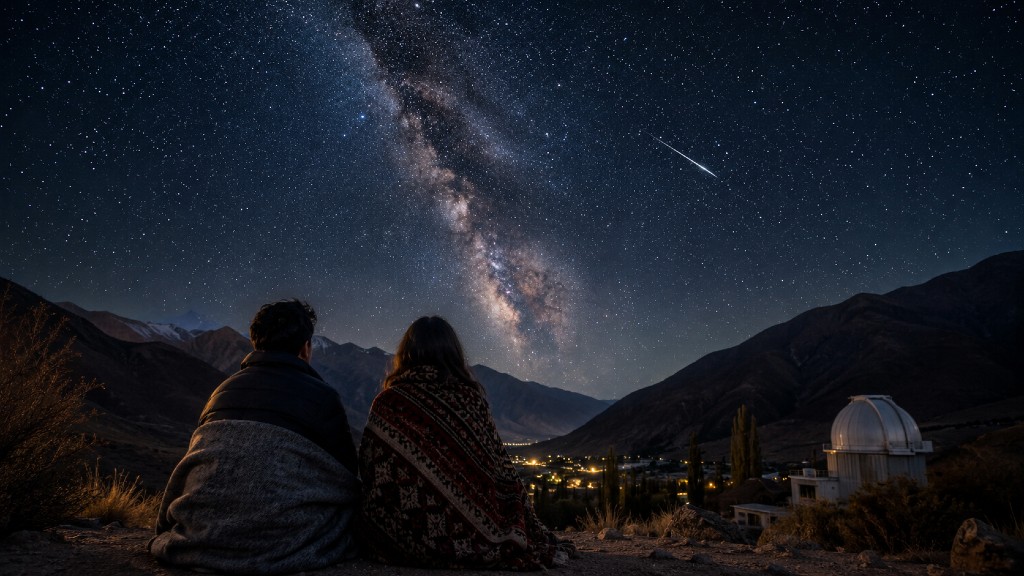
A blanket draped over our shoulders, a hot drink, a conversation without cell phones, and a night that slowly becomes a memory.
The Challenge of 2026: The peak will have too much Moon
The peak activity of the Southern Delta Aquarids is expected to occur on the night of July 30–31, 2026. However, that date will coincide with a Moon that is approximately 98% illuminated.
The American Meteor Society warns that moonlight will severely impair viewing conditions during the peak. This is particularly important because the Delta Aquarids are typically fainter than other meteor showers.
To put it another way: the date with the highest theoretical activity won't necessarily be the best night for stargazing from the Elqui Valley.
Astronomy forces us to let go of a common notion in tourism: that everything can be planned and guaranteed.
That's not how the sky works.
It depends on the Moon, the clouds, humidity, location, light pollution, and also on the observer’s patience. A responsible experience should not promise a specific number of meteors. It can offer a location, guidance, and time to look. Ultimately, the phenomenon retains its freedom.
August Brings a Second Chance
The Delta Aquariids meteor shower will continue until around August 23. Meanwhile, the Moon will wane after the full moon in late July until the new moon on August 12.
This opens up an interesting possibility: on some nights in the first half of August, there will be fewer meteors than at the peak, but the skies will also be potentially darker.
It's no guarantee of a spectacular show. It offers a more balanced perspective for those who value both the quality of the sky and the chance to spot a meteor.
On August 12, there will also be a total solar eclipse, but the path of totality will cross Greenland, Iceland, northern Russia, the Atlantic Ocean, Spain, and a small area of Portugal. It will also be partial in other parts of the Northern Hemisphere. It will not be visible from Chile.
The local connection to this eclipse is indirect, but astronomically useful: a solar eclipse occurs during a new moon, and therefore the nights around that time will have little moonlight.
While part of the Northern Hemisphere will watch the Sun set, Chile’s northern region will experience a different kind of darkness: that of a winter sky in which the Milky Way, the southern constellations, and the brightest meteors still streaking through the atmosphere can once again be seen.
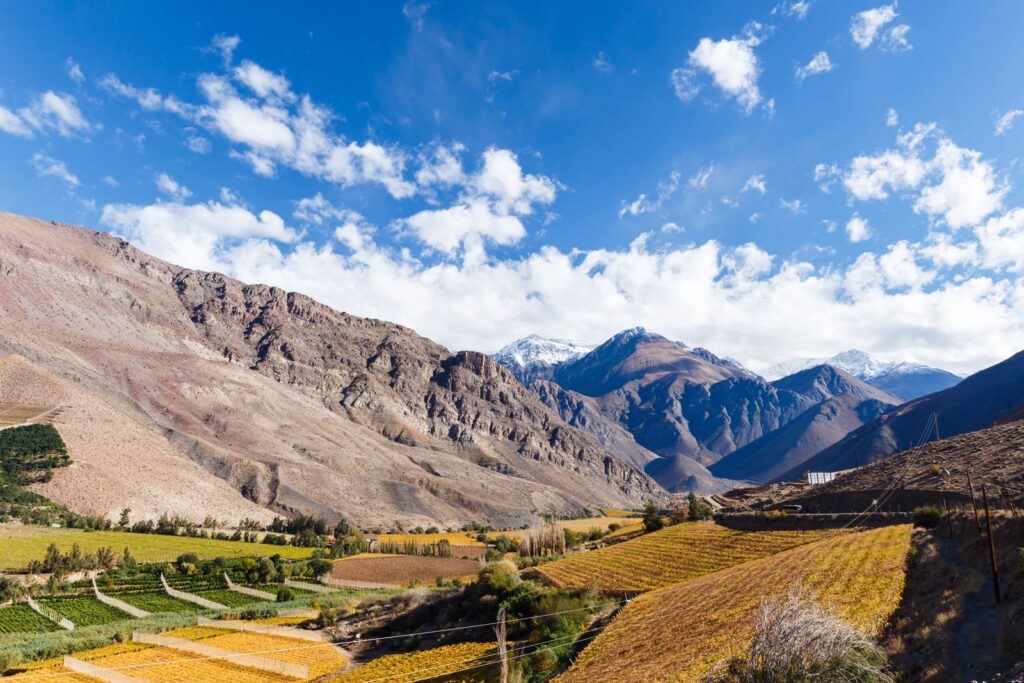
Why the Elqui Valley?
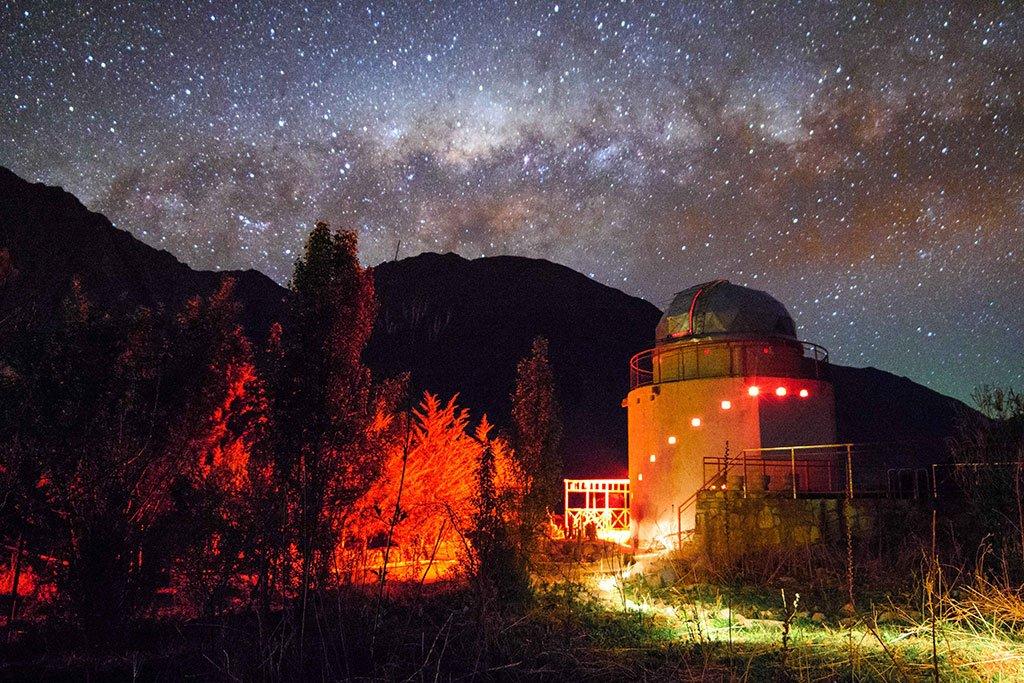
The Elqui Valley is one of Chile's most renowned astro-tourism destinations. The Coquimbo Region features an extensive astronomical trail and observatories such as Mamalluca, Cerro Tololo, and Gemini, as well as other venues for educational outreach and tourist observation.
But to reduce the valley to its technical aspects would be to miss an essential part of the experience.
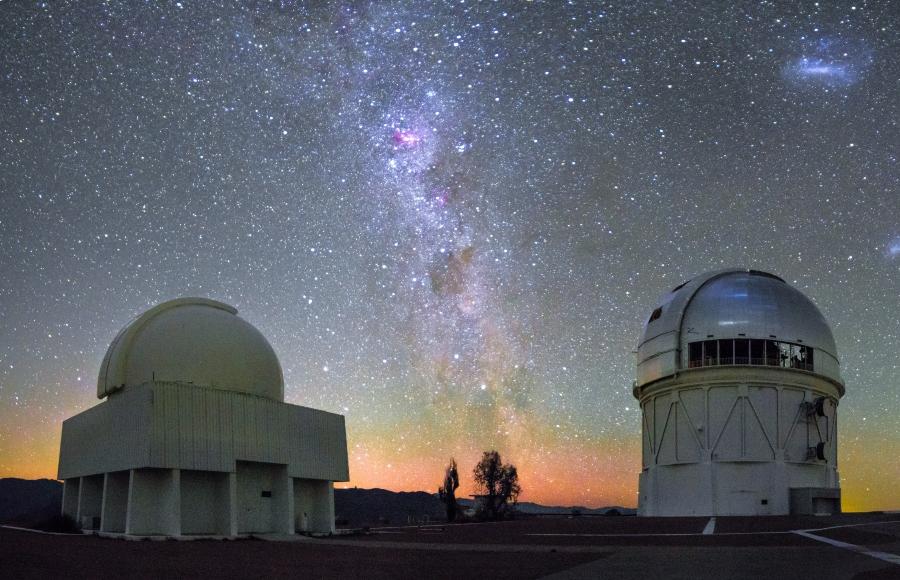
Here, the night has texture.
The hills become silhouettes. The cold forces us to draw closer. The towns slow down, and the sky takes on a presence it rarely retains within cities.
Stargazing in the Elqui Valley isn't just about spotting more astronomical objects. It's about observing them within a landscape that changes our perception of time.
Science explains the phenomenon. The territory gives it meaning.
An evening can begin before the first stars appear: by strolling through a town, visiting a vineyard or a pisco distillery, chatting as the sun sets, enjoying a hot meal, or taking a guided tour of an observatory.
Then darkness falls.
And with it, the wait.
How to Plan a Night of Stargazing
You don't need a telescope to observe a meteor shower. In fact, since the streaks can appear in different areas, the best tool is usually the naked eye.
Find a dark, safe, and authorized location, away from direct light. Do not set up on the shoulder of a road or enter private property without permission.
Dress in layers: nights in the valley can get very cold. A blanket, a reclining seat, water, and a hot drink can completely change the experience.
Avoid looking at your phone. Every time you’re exposed to a bright screen, your eyes have to readjust. NASA recommends spending about thirty minutes in the dark and looking at a wide area of the sky, not just the radiant.
It's also a good idea to check the following before you leave:
- the cloud cover forecast;
- the phase and time of the Moon's rise;
- road conditions;
- observatory hours and reservations;
- the rules of the chosen location.
And, above all, it's best to go in without any rigid expectations.
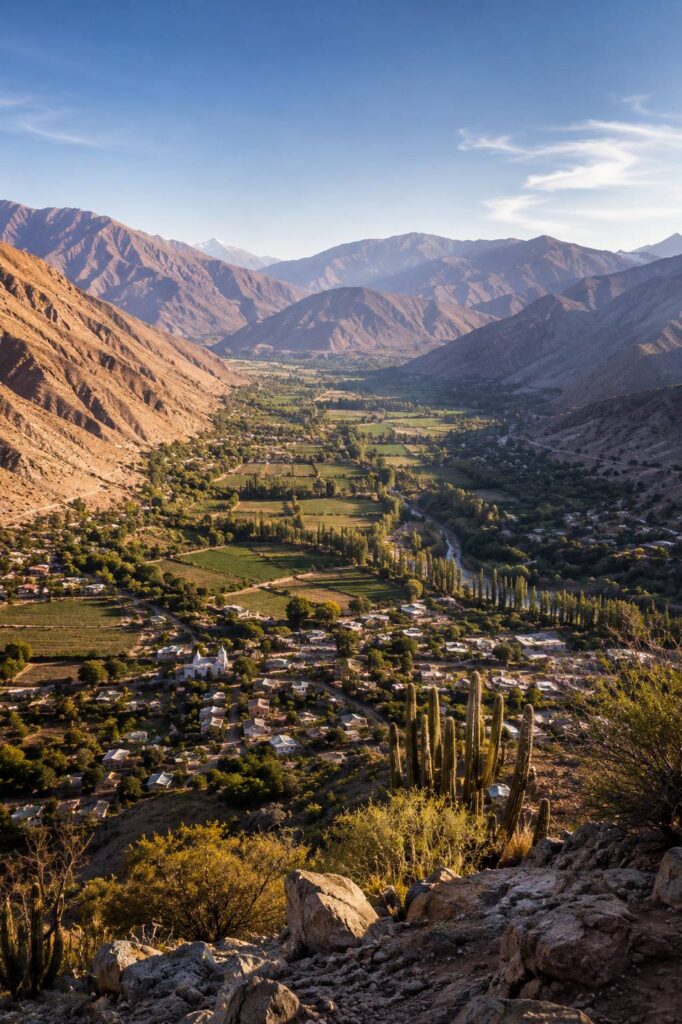
A meteor shower isn't a show with a set schedule. There may be several minutes of silence between one meteor and the next. It is precisely that wait that makes observing the sky different from looking at a screen.
Experience isn't measured solely by meteors
There’s an anxious way of approaching natural phenomena: counting how many shooting stars we saw, taking the perfect photo, comparing our night to others’, and quickly deciding whether it was “worth it.”
But nature doesn't always follow that logic.
A night can be meaningful even if we see only two shooting stars. It can linger in our memory because of the conversation that took place beforehand, the shared silence, the cold, the landscape, or the moment when we looked up and realized we hadn’t looked up in far too long.
From Sinfully's perspective, that is where the true value of the Delta Aquarids lies.
Not in consuming a performance, but in reclaiming a form of presence.
Conscious desire can also begin this way: with curiosity, with time, with the choice to step outside our routine and allow something to surprise us without demanding an immediate result.
An experience for couples, friends, and solo travelers
The Elqui Valley is especially well-suited for those looking for a unique getaway.
It can be romantic without resorting to clichés. It can be introspective without needing to isolate oneself. It can be experienced with friends, as a couple, in a small group, or alone.
The Delta Aquariids are the starting point, but not the entire journey.
The true journey lies in the sum of its parts: the dark sky, mountain villages, local culture, observatories, relaxation, cuisine, scenery, and conversations that find their place because the noise of everyday life is far behind.
Not all intense experiences require loud music, crowds, or a packed schedule. Some become unforgettable precisely because they force us to slow down.
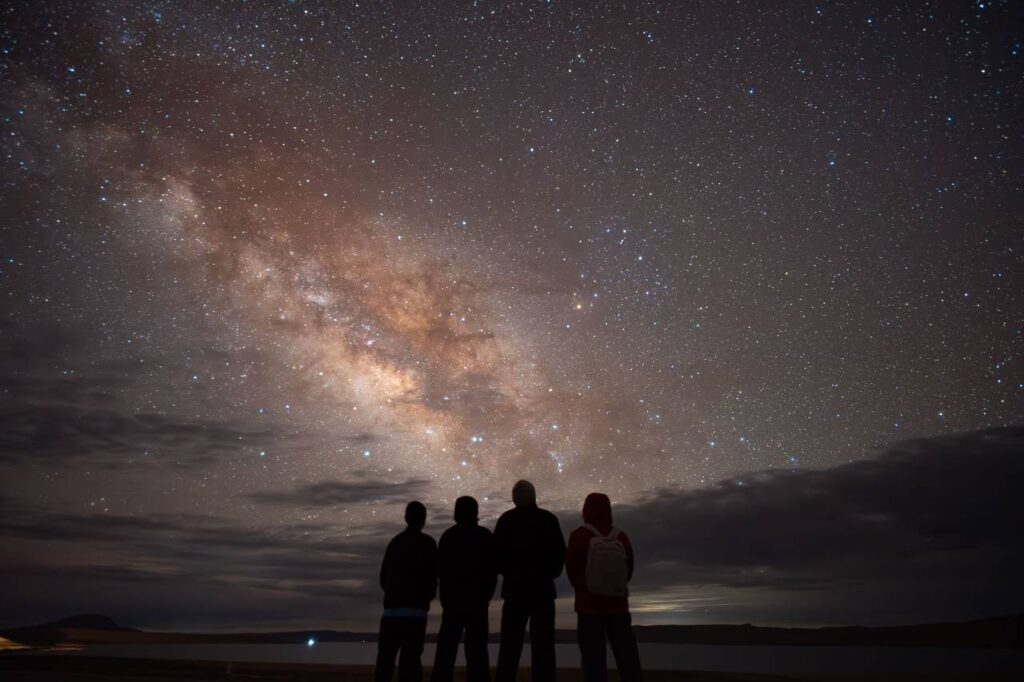
Look up at the sky to feel again
August 2026 won't offer a guaranteed meteor shower over the Elqui Valley. It will offer something more down-to-earth: the chance to seek out a dark night while the Delta Aquarids remain active and the Moon slowly retreats from the sky.
Several meteors may appear.
We might see just one.
It's even possible that the clouds could throw a wrench in all our plans.
But the valley will still be there: the hills, the cold, the vastness of the sky, and that sense of smallness that doesn't diminish us, but rather puts things back into perspective.
There are nights that don't need to live up to some grand promise.
They just need to give us some time.
- Time to pause.
- Time to look.
- Time to let the sky do its work.
Delta Elqui invites you to experience the region through astronomy, contemplation, and connection. Be sure to review the experience and its current terms and conditions before planning your trip.